St. Wenceslav
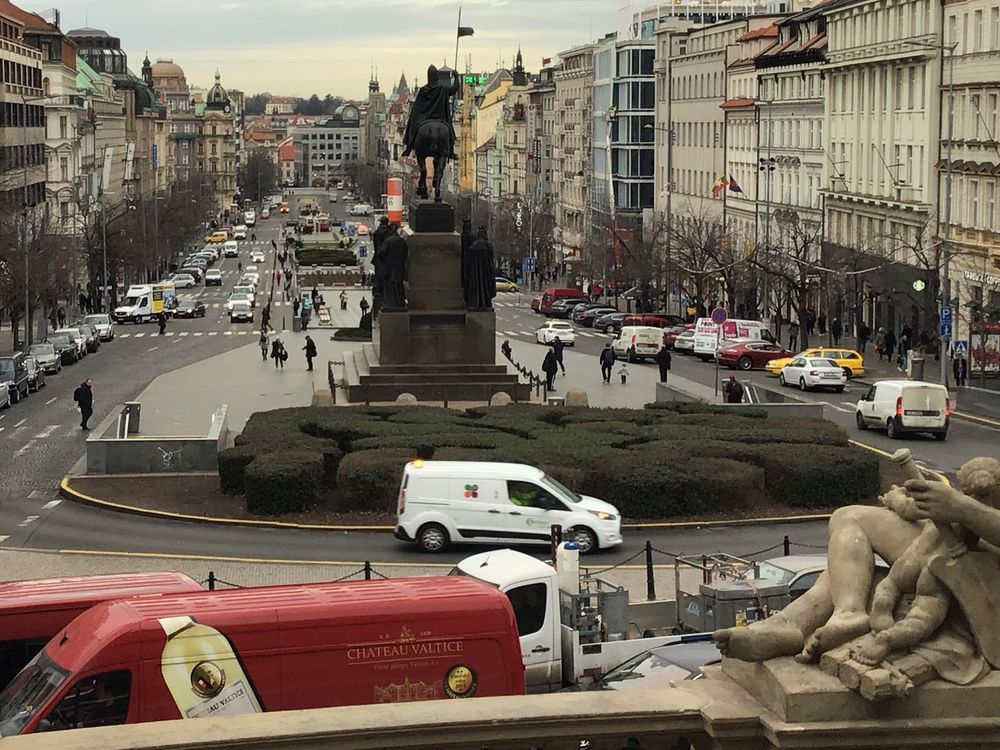
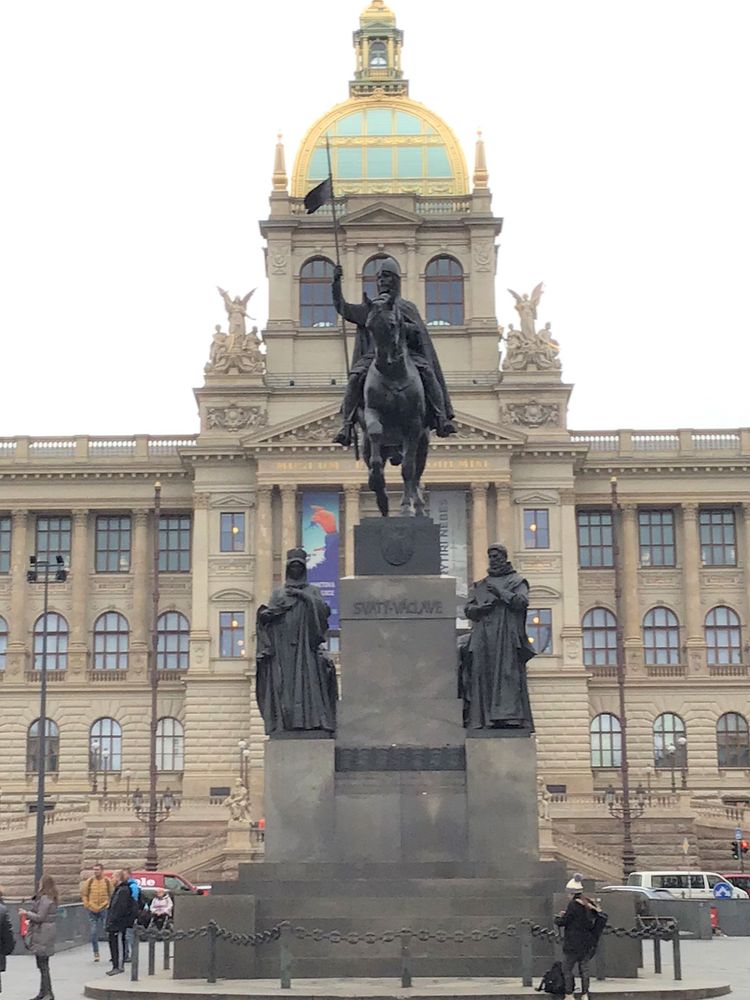
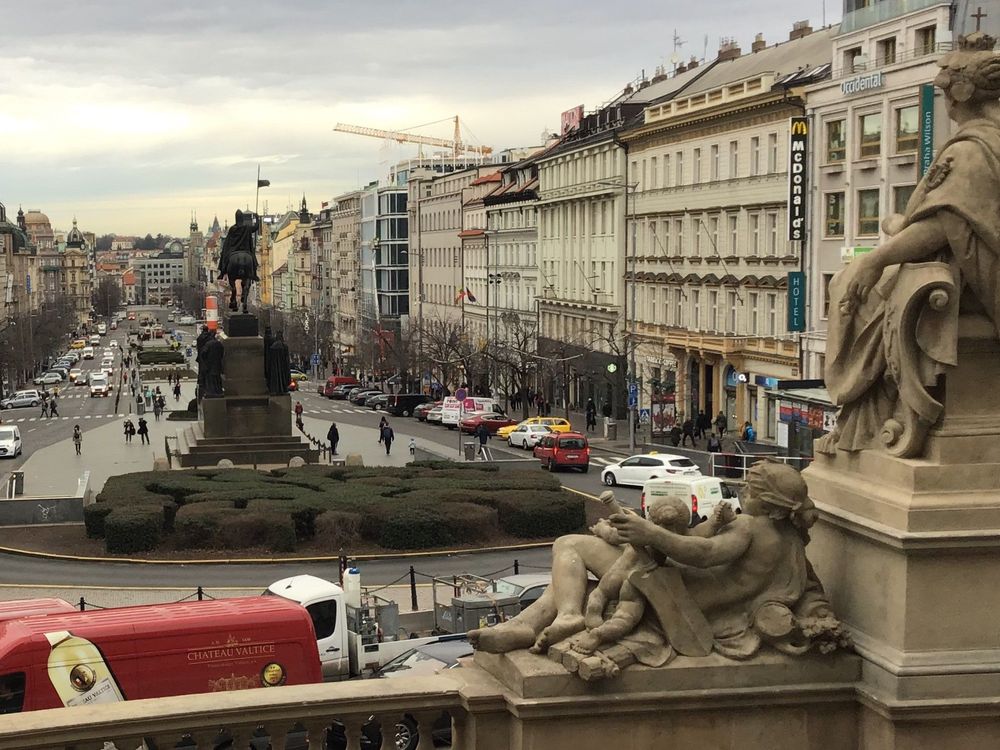
Josef Václav Myslbek had to fight hard for his work. When the thought of setting an equestrian sculpture of St. Wenceslas in front of the newly constructed National Museum matured, the Prague council first approached significant artist Bernard Seeling. His design gained support and a fundraising effort to create his sculpture took place between 1880 and 1886.
Subsequently, Myslbek entered the game. An esteemed artist, a professor at the Academy of Fine Arts, he had already spent several years developing the St. Wenceslas theme and was ready for the work. We will never find out what allowed Myslbek to win over the contract to create the model of the sculpture, but he indeed received the order in 1887. In the meantime, works regarding the concept of the sculpture were already underway. Only the third Myslbek design was accepted, as it received a Gold Medal at an exhibition in Munich.
Drawings of the monument show that Myslbek spent a great deal of time not just on the preparatory sketches but also on equestrian observation. The model for his first designs was a stud named Tigr, from the stables in Prague-Suchdol, owned by Alexandr Brandejs, a significant benefactor of sciences, culture and art. Myslbek also sought inspiration in ancient and Renaissance works. However, sculptures by Myslbek’s Parisian contemporaries, Emmanuel Frémiet and Paul Dubois, depicting Joan of Arc in a saddle were also influential.
An unexpected complication arrived with the assignment of a part of the funding for completion of the sculpture by the Viennese Assembly. The Assembly decided to support the monument in January of 1894, but conditioned upon release of fund by issuing a public tender. After seven years of work, Myslbek had to fight for his lucrative order all over again.
Nearly twenty artists entered the competition. However, the deadline for delivering a bronze model of the sculpture was short – closing on December 10, 1894. This gave Myslbek an advantage. Aside from Myslbek’s, only three designs arrived within the deadline, including models by Bohuslav Schnirch and František Rous.
Rous’ sculpture appeared stiff, his horse standing on all four, with head arched to the chest, lacking elegance. Renowned sculpture Bohuslav Schnirch was a better-quality competitor, having just gained fresh reknown with an equestrian monument depicting King George of Poděbrady. He was also more popular, thanks to the designs of the three-horse chariots for the National Theater.
The committee came to a cunning decision – on December 15, 1894, they announced two first-place winners and divided the award of three and two thousand guldens between Schnirch and Myslbek. Third place and a thousand guldens went to Rous. According to indications from those times, the committee put Myslbek’s design on the same level as Schnirch’s, likely under pressure. A key role among Myslbek’s protectors was played by the main donor among artistic circles of the time, the important benefactor Josef Hlávka. Thus, the competition failed to solve anything and the situation regarding the monument became a stalemate.
Further development was affected by the eagerness with which Myslbek approached all his work, including the St. Wenceslas monument and defining its design. In 1895 the Land Committee asked Myslbek to produce another model, by which he would be officially appointed as the final creator of the work. At this time, the idea to accompany the St. Wenceslas monument with figures of important Czech saints also emerged.
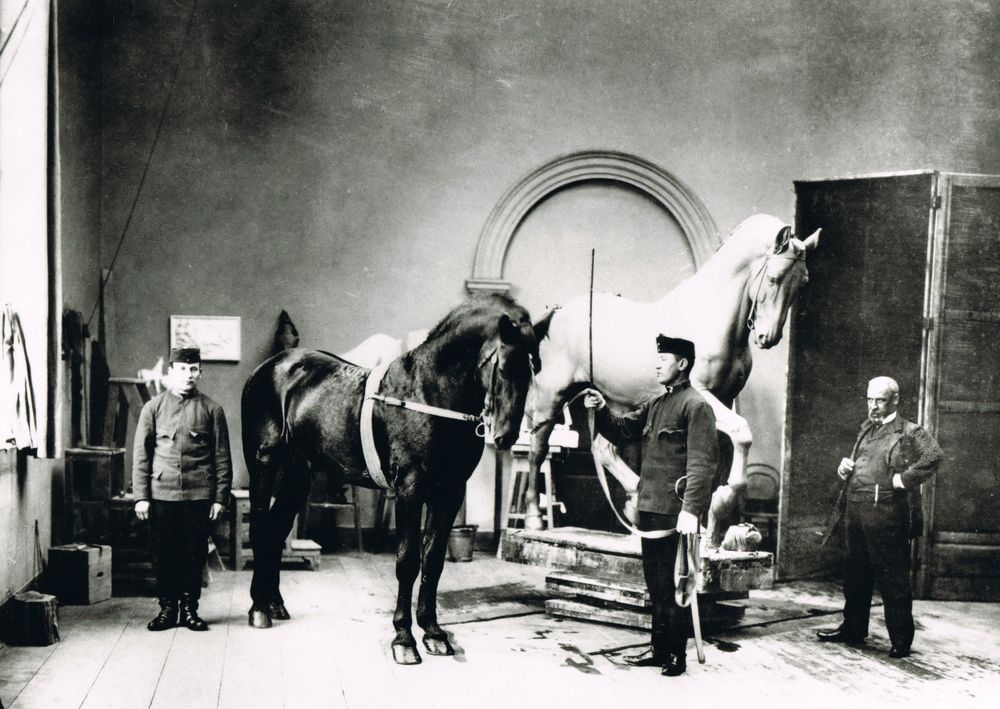
The period between 1896 and 1900 was spent defining the final appearance of the horse figure. Drawings for the monument show that Myslbek initially focused on the sculpture of the horse. His first model was a stud named Tigr from the farm in Prague-Suchdol owned by Alexandr Brandejs, an important benefactor of science, culture and arts. But the sculptor eventually found his model for Wenceslas’ horse in the Na Panenské military stables at Prague - Pohořelec. He selected Ardo, a stallion of the Lower-Saxony breed now known as the Oldenburg horse. Ardo was regularly brought to Myslbek’s atelier from the beginning of 1899.
A year later, on January 31, 1900 the horse sculpture was completed. Yet Myslbek’s horse received much criticism. Professionals particularly blamed the artist for the lack of conceptual logic from an equestrian point of view for choosing a finely-bred modern horse from the end of the 19th century that failed to take into consideration the realistic appearance of horses during the St. Wenceslas period. Luckily, Myslbek successfully defended his approach. The horse was ready, but the works on the figure of St. Wenceslas continued. Myslbek changed the head of the patron alone nine times between 1902 and 1903. Yet works on the figures of the other saints continued at the same time.
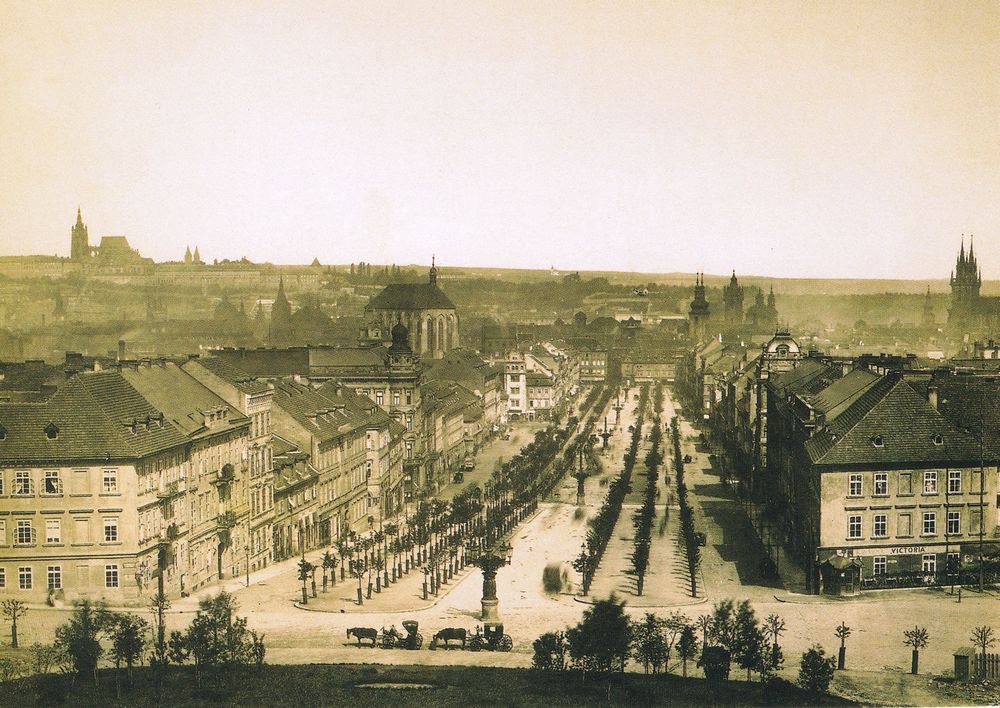
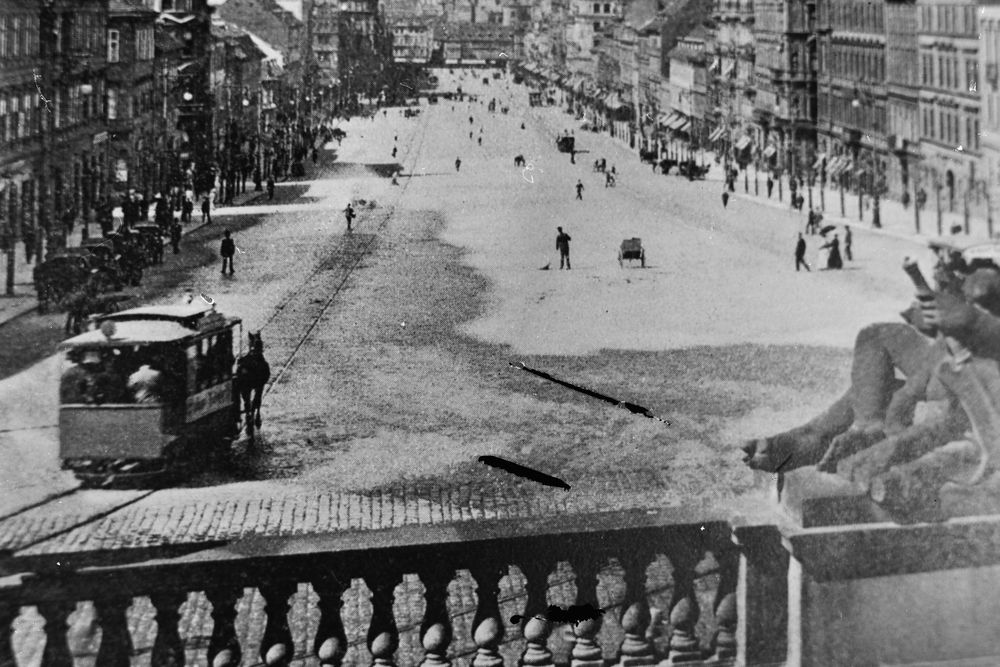
It took another six years before St. Wenceslas arrived in place. In Myslbek’s view, the saint is a decisive ruler, unafraid to stand up for his people, yet without a trace of aggression. The sculpture was originally intended as a part of the entry ramp of the National Museum, even a version with entry to today’s Washington Street was considered.
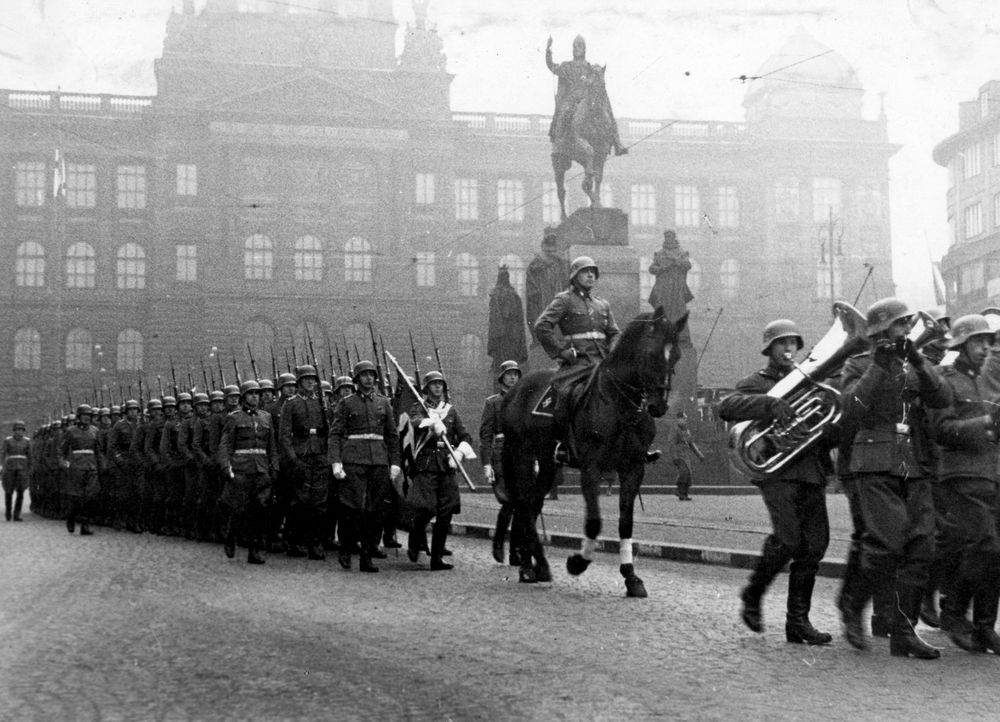
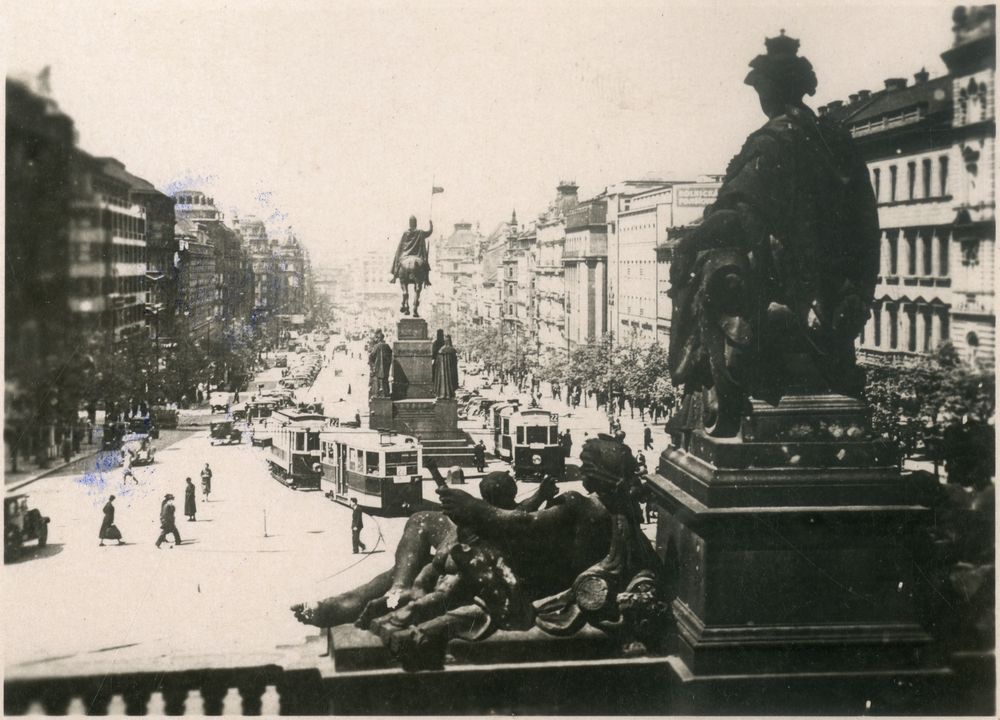
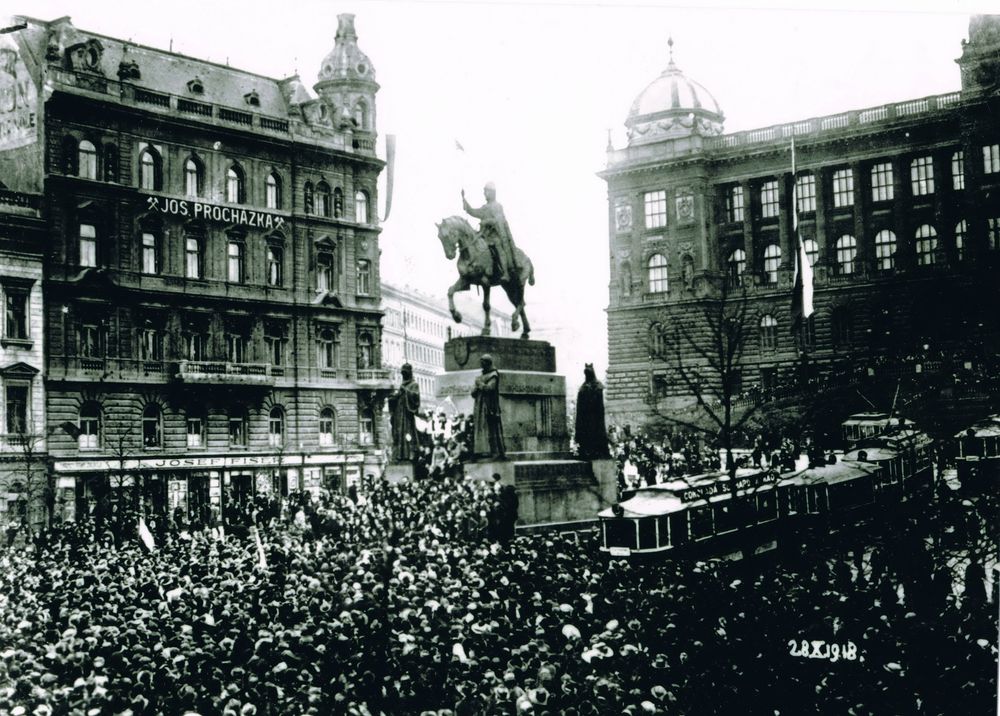
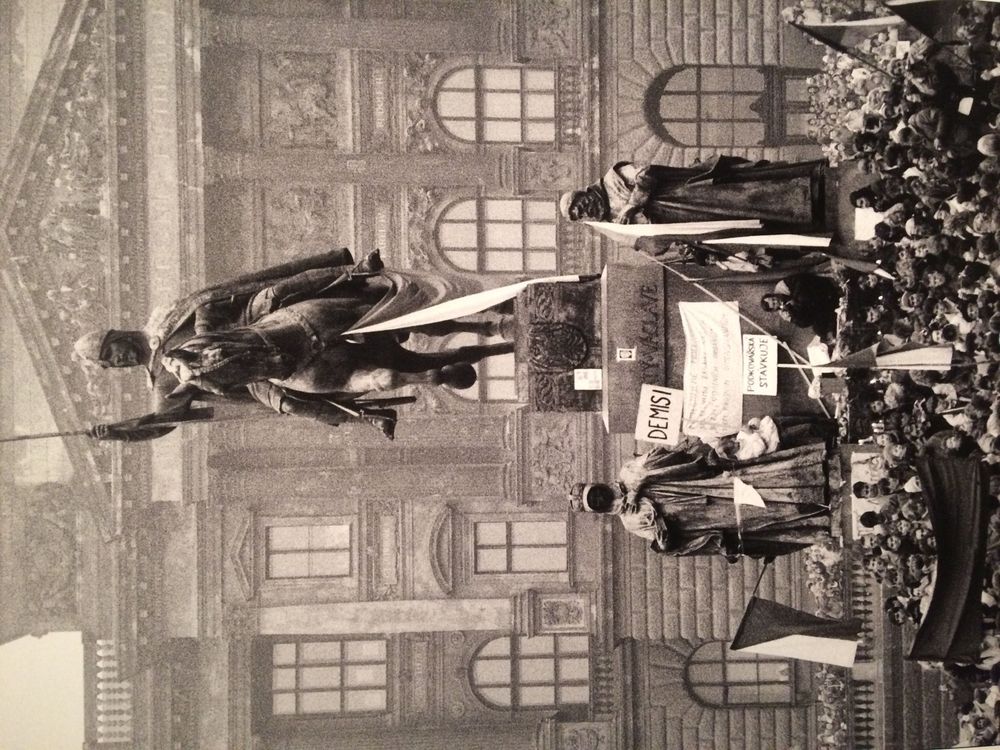
In the end, St. Wenceslas was erected in the place that became the center of the most important moments in the history of Czechoslovak and later Czech state. Myslbek’s St. Wenceslas thus became the traditional witness of the most significant events of the 20th century.